9/11: Under Suspicion - I had a feeling this was going to change a lot
Khushwant Singh tells in the prominent German daily newspaper taz how September 11 changed his and other Sikhs’ everyday lives and belonging, and what it does to innocent people when they suddenly have to prove that they are not among the perpetrators.
Credits: Pixabay
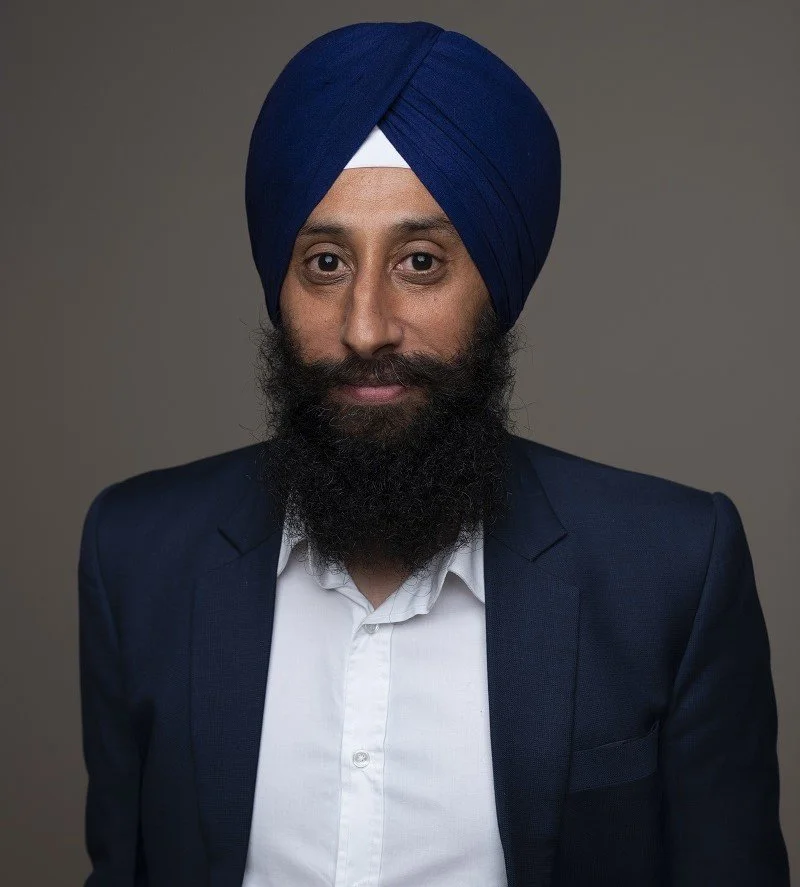
Khushwant Singh is a founding member of the Frankfurt Council of Religions. He writes and speaks at schools, universities, and on podcasts about ethics, wisdom, and sustainability
Two men are standing next to me in the Intercity Express train when one of them says: “Shit, the Taliban have advanced all the way to Hamburg!” I remember it clearly. It was 2013, and I was on my way home from the Federal Ministry for Economic Affairs. I had meetings regarding the federal government’s Make it in Germany welcome initiative which I was co-coordinating at the time. A live experience of Germany’s culture of welcome. In my own home country.
The incident on the train was not an isolated experience. After September 11, 2001, such incidents were part of everyday life, especially when the media reported on Osama bin Laden. “Fucking Taliban!”, “Terrorist! Take cover!” or “The bomb’s about to go off!” people would shout.
These remarks were also directed at people who try to live the wisdom-oriented way of Sikhi. People like me. In the United States, Sikhs experienced more than verbal violence. On September 15, 2001, gas station owner Balbir Singh was shot and killed in Arizona.
As the child of asylum seekers, I learned the hard way to set boundaries. When I hear a degrading remark, I politely say: “I have big ears under my turban. Why did you say that?” The surprise is usually immediate. Most people deny having said anything. I have also responded: “That’s fine. We celebrate Carnival all the time.”
Rarely does anyone apologize. Or ask me what it feels like to be excluded in your own country. Germany is a beautiful and prosperous country, with many wonderful people. And yet I often encounter a kind of grumpiness. What also makes me think is the lack of civic courage. Even on a train that is delayed, creating an unusual opportunity for a dialogue from which there is no easy escape, I have never (!) experienced anyone stepping up and standing beside me. As so often in life, I had to fend for myself as a member of the species Homo Turbanus.
Sikhs do not wear the turban to advertise themselves. We wear it at home, too. We do not proselytize. The turban represents the protective hand of the Divine. It reminds us that something greater stands above us. That we are small lights in the universe. That humanity belongs to one family. When I tie my turban in the morning, it inspires me to humbly live up to the highest vision of myself – with dignity, courage, a commitment to the common good, and in harmony with nature. It also calls to mind experiences of violence and transgenerational trauma that we, as a religious minority, have known since around 1606.
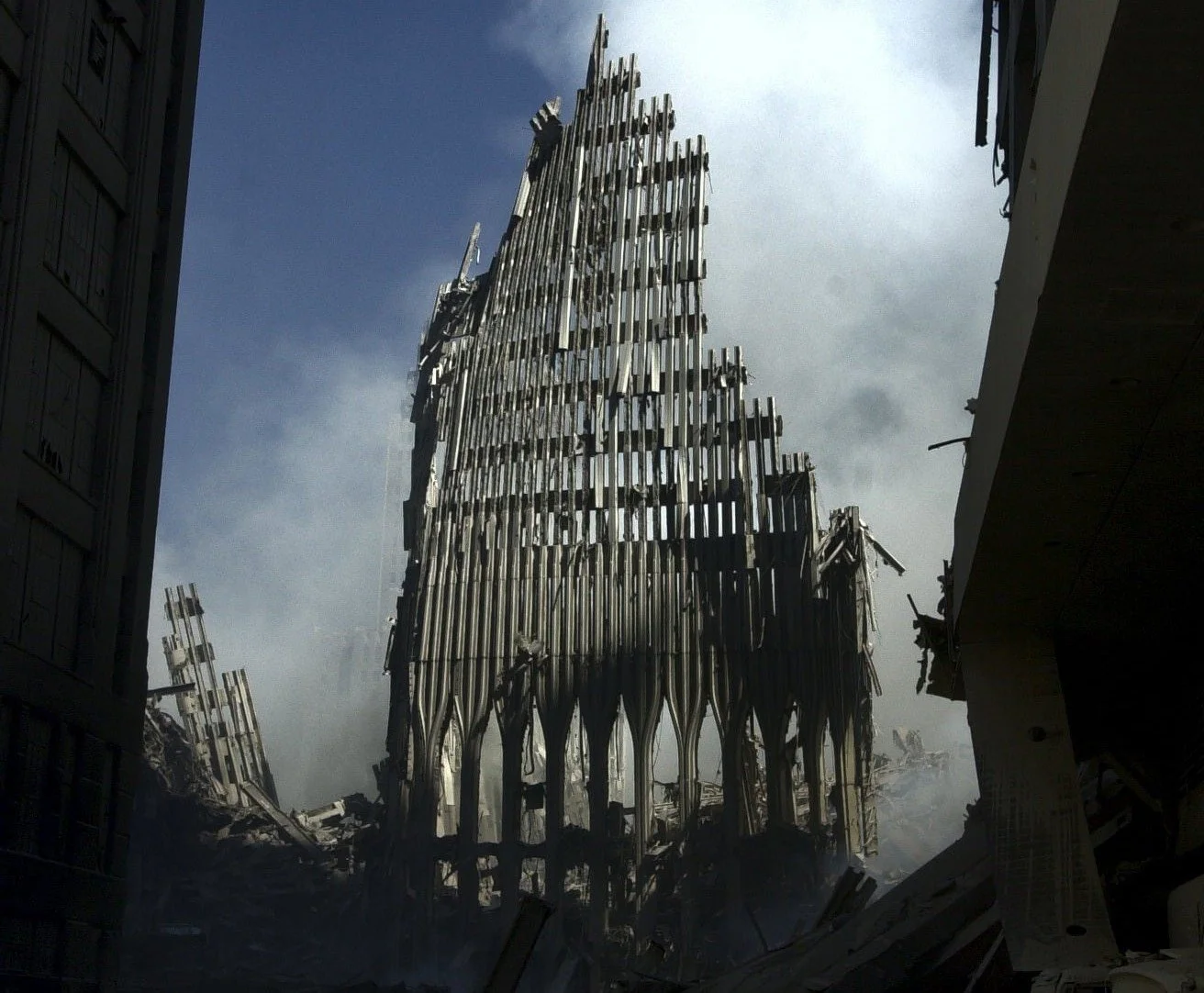
On September 11, I was in my student dorm in Heidelberg. I was nearing the end of my studies in ethnology and education. My little Robotron television from East Germany was on. I watched the Twin Towers collapse. When it became clear that it was an attack, I had a feeling: This was going to change a lot, including for us Sikhs.
We are strangers to ourselves
Things become serious when the abstract takes on a human face. Especially for people who have nothing to do with what is happening. I graduated with a 1.0, the highest possible grade. I was not invited to a single job interview. I was repeatedly subjected to insults. I went to London.
Before 9/11, Sikhs were more likely to be perceived as exotic. I heard: “Where’s your flying carpet?” I replied: “It was hovering in a no-parking zone and got towed.” A man once shouted: “Germany has a ban on face coverings!” At the swimming pool, an older man said to me: “You fucking Arafat, get out of here!” Even back then, I didn’t think I looked like Yasser Arafat. What do you think?
9/11 showed me how little we reflect before we speak. And how strongly we are guided by visual impressions. With the rise of not-so-social media this has intensified. We react immediately. Thumbs up. Thumbs down. Solidarity. Outrage. Our senses set the pace – our souls cannot keep up.
Sikhi reminds us to transcend what is transient. Not to identify with every stimulus and every feeling. To become aware that, spiritually, we are all strangers in a foreign land.
It is human to find someone strange. That can give rise to curiosity. We can learn to ask open questions: “Would you tell me what’s behind your head covering?” A dialogue begins.
Since 9/11, it has become increasingly clear to me: We need less specialized knowledge and expertise. AI can do that. Especially in a country of material abundance, we need more social and emotional intelligence. That is why, among other things, I volunteer through the SikhiCouncil to help cultivate these abilities across generations. If I can contribute to strengthening empathy, dialogue, respect, a sense of community, and complementarity, this also helps us place complex processes such as colonialism in a differentiated context and reflect on the long-term consequences of our actions. This is a societal task. It begins in our families and continues in our educational institutions, communities, and associations, at work, and in politics.
We are all sitting in the boat of impermanence. No prejudice can save us. But a helping hand, a clear sense of purpose, and guidance can support us. In everyday life and as we cross the sea of the diaspora, the eternal mystery we call life.
The wise ones of Sikhi remind us:
“We are strangers to ourselves. We have come to recognize ourselves, to heal, and to become one.”
ਯਾ ਜੁਗ ਮਹਿ ਏਕਹਿ ਕਉ ਆਇਆ ॥ GGS, 251, M.5
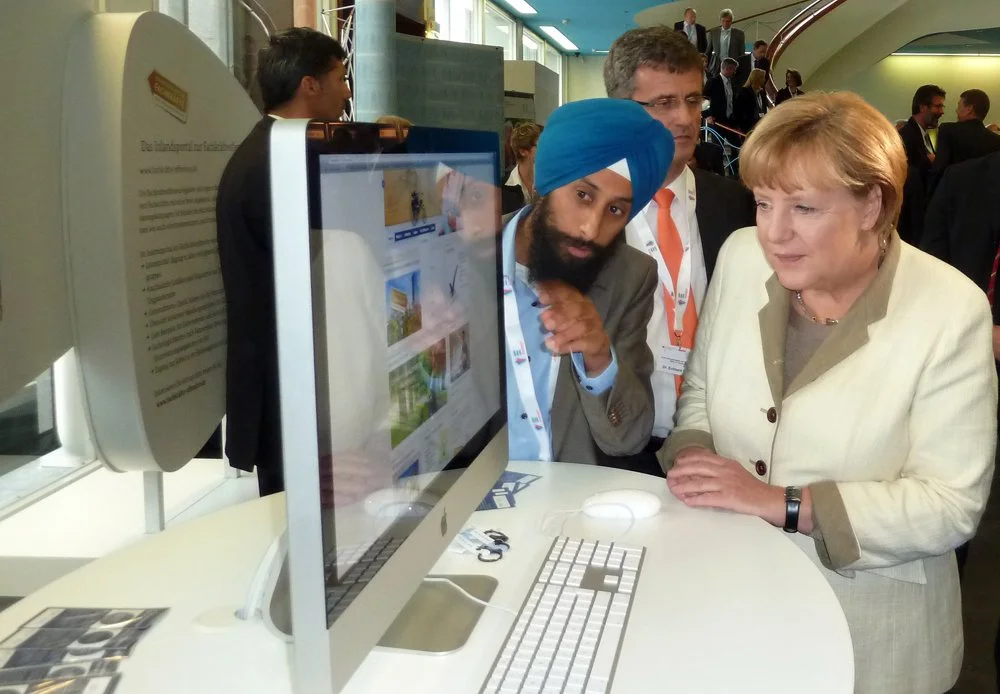
Khushwant Singh presenting the portal of the federal welcome initiative Make it in Germany to Chancelor Angela Mekel on October 5, 2012 in Berlin during the Demography Summit.
Credits: Khushwant Singh
Source: Translation of the article: „Ich ahnte, das wird vieles verändern“", September 5, 2026, taz am Wochenende