Day of Religions – Lived Spirituality in Everyday Life: ਦਦਾ ਦਾਤਾ ਏਕੁ ਹੈ ਸਭ ਕਉ ਦੇਵਨਹਾਰ ॥
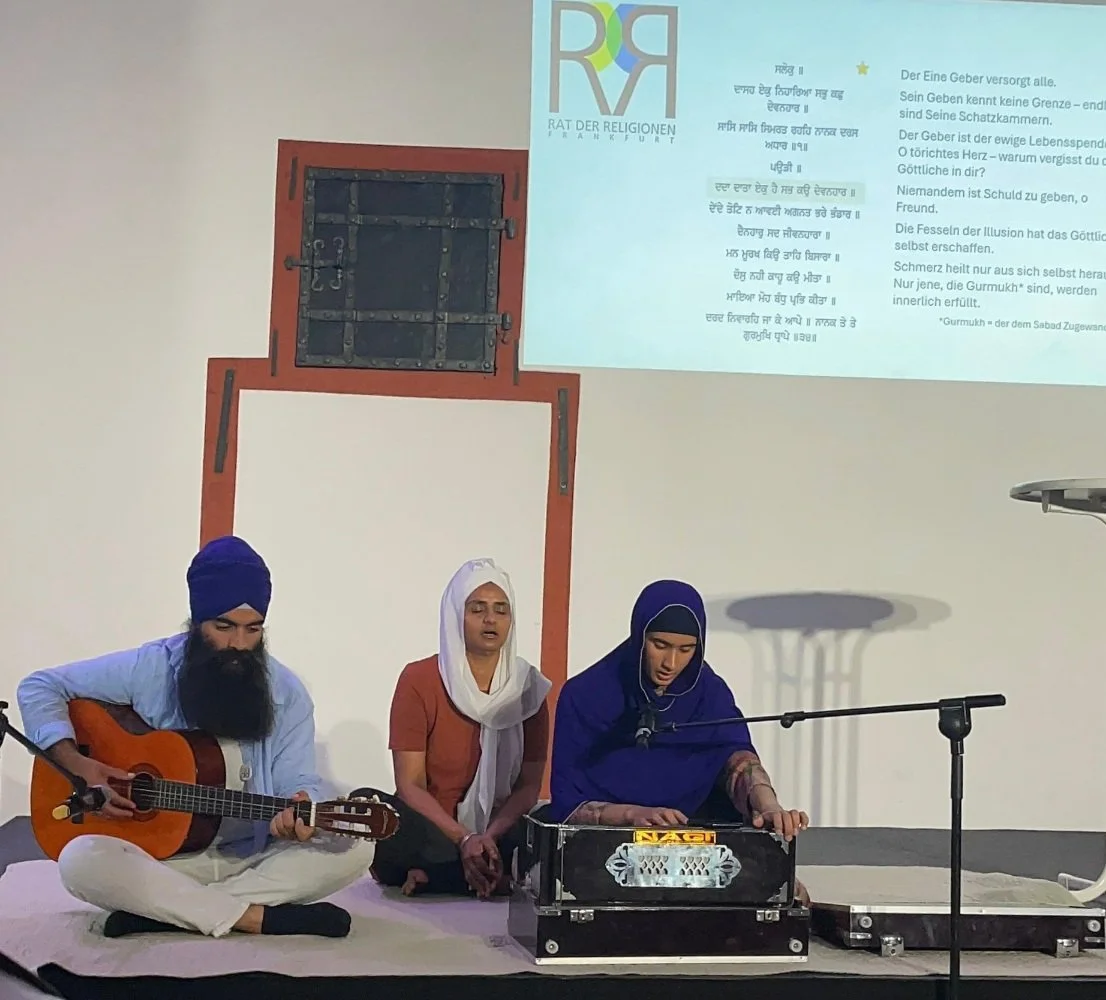
The Day of Religions, held at Frankfurt’s historic town hall at Römerberg, was framed by recitations and inspirations from a wide variety of spiritual traditions – including Sikhi. Credits: SikhiCouncil
Religion in Everyday Life – Day of Religions at the Frankfurt Römer
On June 22, 2025, under the theme “Religion in Everyday Life,” the City of Frankfurt am Main, together with the Council of Religions Frankfurt, welcomed visitors into the dignified halls of the Römer for the eighth time. The Council includes Ahmadiyya, Bahá'í, Buddhists, Christians, Hindus, Jews, Mormons (Church of Jesus Christ of Latter-day Saints), Muslims, and Sikhs. In 2012, the Council of Religions Frankfurt was awarded the city’s Integration Prize and in 2019 the Hessian Integration Prize.
Roughly 1,000 visitors used the opportunity to get to know the religious communities living in Frankfurt, to ask questions, and to take away impulses for peaceful and socially engaged coexistence. As the largest interreligious dialogue platform in the Rhine-Main region, the event placed a strong focus on everyday spirituality this year. Because: Religion is not limited to what happens in sacred spaces. It unfolds in everyday life – in how we interact, how we listen, serve, care, and remain truthfully connected with all living beings and nature.
A Sign of Solidarity in Challenging Times
Mayor Nargess Eskandari-Grünberg and members of the Council of Religions emphasized the importance of interfaith dialogue, especially in times of social crisis. They highlighted how the Day of Religions symbolically shows that Germany is a country of diversity, where people of many backgrounds live out respect and solidarity with deep commitment, stand up against all forms of extremism, and contribute to the common good.
Sikhi – Visible and Audible
The Sikhi way of life was also presented this year. At the Sikhi info booth, information about the unique way of life was shared and framed translations of the opening verse of the preserved timeless spiritual wisdom (Gurbani) were displayed. Visitors could have their names calligraphed in Gurmukhi, taste vegan energy balls, walk through a “Labyrinth of Virtues,” take home and plant “Seeds of Virtue,” and listen to spiritual recitations.
Through conversations, visitors gained a deeper understanding that Sikhi is a holistic, nature-loving, and health-conscious way of life – one that integrates timeless wisdom with practical responsibility in everyday life.
The following inspiration was shared with the visitors:
The One Giver provides for all: ਦਦਾ ਦਾਤਾ ਏਕੁ ਹੈ ਸਭ ਕਉ ਦੇਵਨਹਾਰ ॥
When we talk or think about religion in daily life, we often think of rituals, prayers, or visits to specific religious places – things we do when we have time, when something significant or painful happens.
This verse from the timeless wisdom, which lies at the heart of Sikhi, reminds us of the profound significance of spirituality in everyday life. It is about our very being – in the now. Here and today.
The verse begins with: “The One Giver provides for all.”
Everything we need for life is unconditionally gifted to us: the air we breathe, the water we drink, the gravity that keeps us grounded, our senses to perceive, the food of nature to give us energy, love and friendships to connect and grow, and humor to bear life's challenges.
The creative force of the Divine, which is experienced through nature and through us, sustains and transforms life continually. The divine treasures are inexhaustible – we are receiving them without end.
O foolish heart, why do you forget the Divine within you?
Let us not, in the rush of everyday life, forget the light and the energy of the Divine that carries us. Let us consciously remember that we are part of a lovingly guided whole. Let us reflect on our conditionings – so that we may overcome our alienation from our own inner core.
Spirituality, therefore, first and foremost means: being awake, being connected, being in love – and being so in everyday life. While cooking, while listening, in traffic, in the checkout line, at work, in school, or at the kindergarten – and also at the Day of Religions.
When we feel that everything is carried by something greater, then every moment becomes sacred. And we become humble. This is also the deeper meaning of the Dastar, the turban: it reminds us to live with dignity – and with humility.
Gurmukh – truly spiritual people – feel inwardly fulfilled, regardless of circumstances. Not because they have everything. Not because all their wishes come true. But because they are connected to the flow of life – to the Nam and the Hukam. And so, they do not blame others or life when it gets difficult.
Spirituality is a living reminder of our soulful existence. We are not biological robots. We are ensouled beings – on a mystical journey. A journey where we gradually learn to cultivate an attitude of gratitude, attentiveness, and deep love – for the Divine and its creation.
Now. Here. In every breath.
Translation of the recited verses
ਪਉੜੀ ॥
ਦਦਾ ਦਾਤਾ ਏਕੁ ਹੈ ਸਭ ਕਉ ਦੇਵਨਹਾਰ ॥
The One Giver provides for all.
ਦੇਂਦੇ ਤੋਟਿ ਨ ਆਵਈ ਅਗਨਤ ਭਰੇ ਭੰਡਾਰ ॥
Its giving knows no end – boundless are its treasures.
ਦੈਨਹਾਰੁ ਸਦ ਜੀਵਨਹਾਰਾ ॥
The Giver is the eternal sustainer of life.
ਮਨ ਮੂਰਖ ਕਿਉ ਤਾਹਿ ਬਿਸਾਰਾ ॥
O foolish heart – why do you forget the Divine within you?
ਦੋਸੁ ਨਹੀ ਕਾਹੂ ਕਉ ਮੀਤਾ ॥
There is no one to blame, O friend.
ਮਾਇਆ ਮੋਹ ਬੰਧੁ ਪ੍ਰਭਿ ਕੀਤਾ ॥
The bonds of illusion were created by the Divine Itself.
ਦਰਦ ਨਿਵਾਰਹਿ ਜਾ ਕੇ ਆਪੇ ॥
Pain only heals from within itself.
ਨਾਨਕ ਤੇ ਤੇ ਗੁਰਮੁਖਿ ਧ੍ਰਾਪੇ ॥੩੪॥
Nanak: Only those who are Gurmukh (spiritual ones) are inwardly fulfilled. GGS, M.5, 257
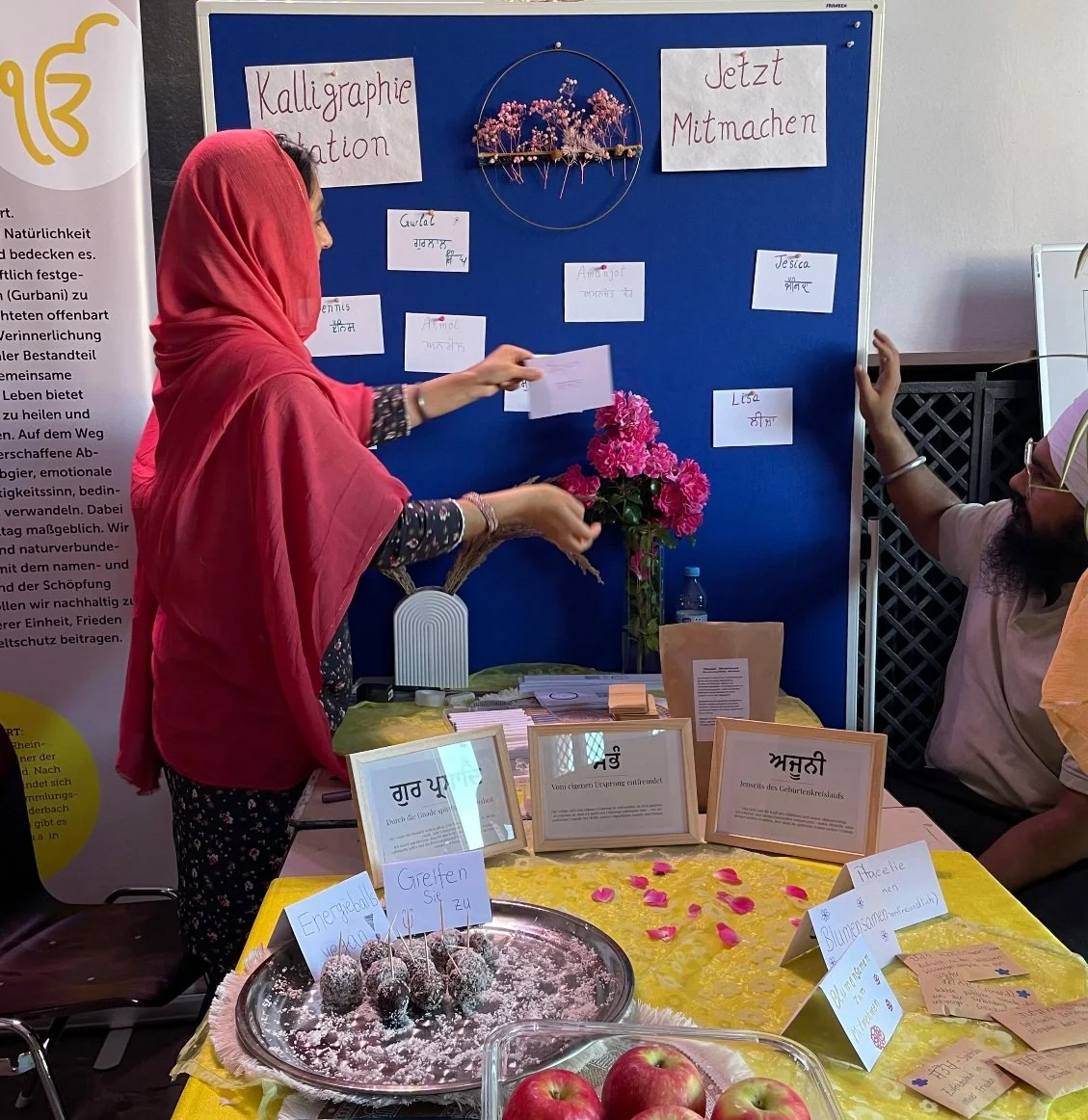
At the Sikhi booth, visitors not only found framed translations of the opening verse of the preserved timeless spiritual wisdom (Gurbani). They could also have their names calligraphed in Gurmukhi, enjoy vegan energy balls, walk a “Labyrinth of Virtues,” and take home and plant “Seeds of Virtue.” Credits: SikhiCouncil